Most people think you need hundreds of acres and a mountain of debt to make a real living off the land. They picture massive tractors, endless fields of single-crop corn, and corporate suppliers controlling every seed.
That narrative is entirely wrong.
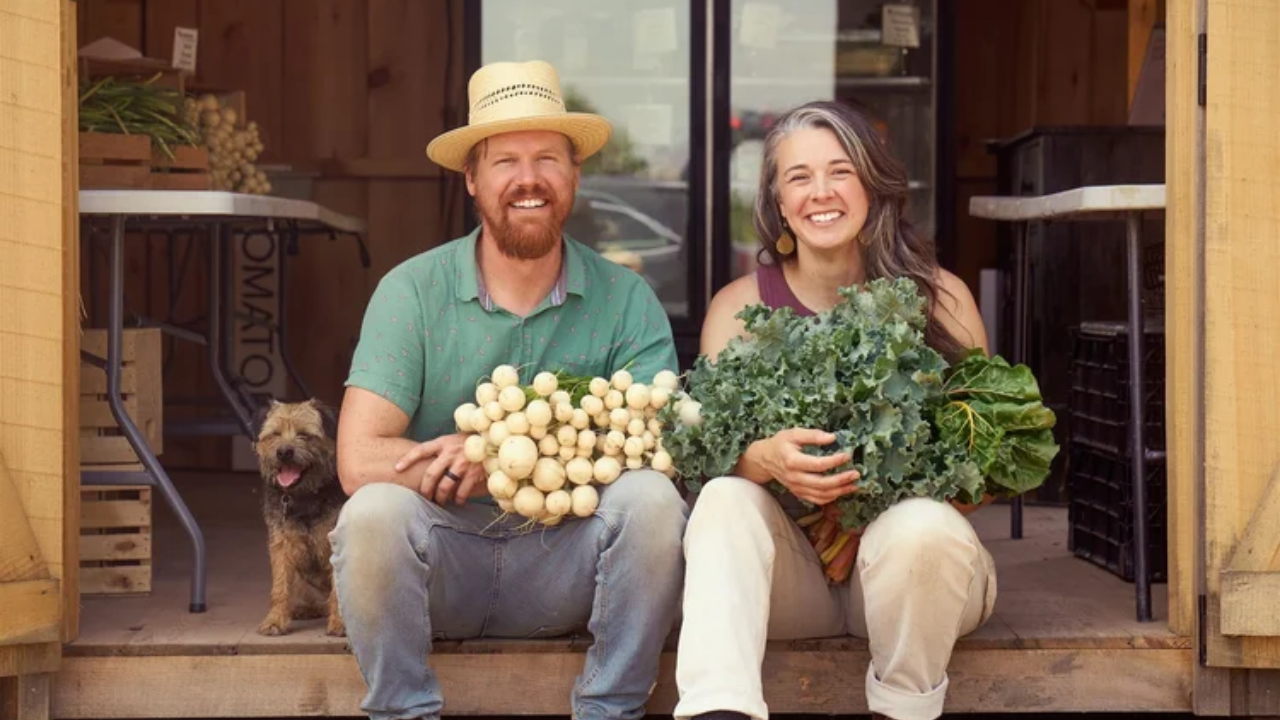
Look at what Shane and Emma Rozeveld pulled off with Aslan Organics. They didn't inherit a multi-generational estate. They started in 2017 with two tiny 8-by-12-foot garden plots behind a community building in British Columbia. Fast forward a few years, and they've scaled that humble backyard hustle into a thriving 50-acre farm in Ontario, pulling in over $200,000 annually from just a fraction of that acreage.
If you want to understand how micro-farming is rewriting the rules of modern agriculture, you have to look past the square footage and examine the strategy.
The Myth of Scale in Modern Farming
For decades, the agricultural playbook told growers to get big or get out. Farmers bought more land, more heavy machinery, and more chemical inputs just to chase razor-thin profit margins on commodity crops.
Market gardening flips that economic model completely upside down.
Instead of growing low-value crops by the ton, intensive market gardeners focus on high-value, short-season specialty crops like salad greens, radishes, arugula, and turnips. When the Rozevelds started out, they didn't even have fancy gear. They cut their greens with ordinary scissors before slowly investing back into their business.
Every dollar earned went straight into better infrastructure—a used greenhouse, proper walk-in coolers, and efficient harvesters. They didn't take out reckless bank loans. They grew at a pace that their cash flow could actually support.
Moving Across the Country to Find the Right Market
Location dictates everything in direct-to-consumer agriculture. When the couple operated in British Columbia, the local market was saturated with established organic growers. Their operation stayed largely cash-neutral.
In 2020, they packed up and moved to Ontario, restarting their operation in Sarnia by 2021.
That shift changed everything. Sarnia had a population of around 75,000 and a vibrant farmers' market running year-round, both indoors and outdoors. But breaking in wasn't automatic. When Shane first approached the local market managers, he was met with skepticism. The standard response was brutal: "We just don't do organics at this market."
They didn't argue. They let the produce do the talking.
Their very first market day brought in a modest $247. By late summer, that single-day figure jumped to $1,500. Local shoppers tried their specialty salad mix and realized they had never tasted anything that fresh. Word of mouth travels fast when your product actually tastes alive.
Scaling From a Hundred Bucks to Ten Grand Weeks
Revenue didn't climb in a straight line; it compounded. Most years saw a 30% jump in revenue, with some years hitting 40% growth or even doubling. By the end of 2025, annual revenue cleared the $200,000 threshold across just 2.5 acres of cultivated land.
Weekly numbers tell the real story of how far the business has come.
A standard early-spring weekend now pulls in over $2,000 at the physical market alongside another $1,000 in online direct sales. During peak summer weeks, multiple revenue streams push total weekly sales past $10,000.
Diversification is the safety net here. They don't rely solely on one farmers' market stall. Their income streams include:
- Year-round physical farmers' markets
- Direct online ordering platforms
- Flexible custom farm-share programs
- Local wholesale customers
Building a Customer Base That Actually Sticks
Subscription boxes and community-supported agriculture (CSA) models have been around for years, but most of them fail because they treat customers like a captive audience. They hand out a rigid box of whatever vegetables happen to be rotting in the cooler.
Aslan Organics took a different approach with their farm-share program.
They started with just 24 members. Instead of forcing a pre-set box on buyers, they let customers choose what they actually wanted from the weekly harvest list. They even built flexibility into the schedule, letting members skip weeks during summer vacation months.
That customer-first flexibility built fierce loyalty. Membership numbers climbed from 32 to 40, then 60, then 80, pushing past 100 participants. When you respect your customers' preferences, they stick around for the long haul.
You don't need a massive commercial footprint to build a profitable agricultural enterprise. You need intense crop focus, a market that actually wants fresh produce, and the discipline to reinvest your early profits instead of burning them on debt.
Start small. Test your local market. Let your quality build your reputation.