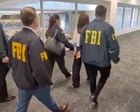
Geopolitical espionage rarely looks like a Hollywood thriller. There are no dramatic trench coats on foggy bridges or secret briefcases swapped in subway stations. Instead, it looks like an ordinary thirty-four-year-old resident of Irvine, California, packing her bags at Los Angeles International Airport, hoping to catch a flight back to China before the FBI catches up to her.
Federal agents arrested Wanying Zhang, also known as Heather, right at the terminal. The charge is straightforward yet serious: acting as an unregistered foreign agent. The underlying allegation is far more targeted. US authorities state that Zhang spent months surveilling the family of Taiwan's President Lai Ching-te on US soil, tracking his son's daily movements, photographing his residence, and logging licence plate numbers.
The Mechanics of Transnational Surveillance
Why target a president's son living thousands of miles away from Taipei? It is a classic move in modern intelligence operations. Governments that view self-governing entities as breakaway territories often rely on proxy surveillance to gather leverage, assess personal vulnerabilities, or simply intimidate political targets who thought they were safe abroad.
According to federal court documents, Zhang traveled up to Seattle in 2025 explicitly at the direction of Chinese handlers. She did not just take casual notes. Prosecutors allege she employed professional tradecraft to mask her movements, dodging detection while tailing Lai Ting-yu, a US resident and son of Taiwan's leader.
Taiwan's presidential office didn't mince words following the arrest. They labeled the operation a clear-cut instance of transnational repression. When foreign security services reach across international borders to harass, track, or silence relatives of dissenting political figures, they cross a line that sovereign nations are built to defend.
Why California Has Become a Quiet Intelligence Hotspot
California is an economic powerhouse and a melting pot of global cultures. Unfortunately, that same openness makes it a prime playground for foreign intelligence gathering. Academic institutions, sprawling tech hubs, and large diaspora communities provide ample cover for foreign agents attempting to blend into the background.
Law enforcement agencies are dealing with an alarming spike in clandestine operations orchestrated by Beijing on American soil. Cases involving illegal police stations, academic espionage, and targeted harassment of Chinese dissidents have steadily climbed over recent years. Zhang's arrest highlights a sobering reality. You don't need a formal diplomatic passport or a military uniform to conduct hostile intelligence work inside the United States. You just need someone willing to look the other way while cashing checks from overseas handlers.
The Legal Tightrope for Federal Prosecutors
Bringing charges under the Foreign Agents Registration Act or related statutes sounds simple, but building an airtight case takes months of counterintelligence work. Federal prosecutors must prove intent, direct communication with foreign principals, and a failure to register with the Justice Department.
Bill Essayli, the first assistant US attorney for the Central District of California, laid out the stakes clearly during the initial announcement. Zhang utilized deliberate surveillance techniques designed to evade law enforcement eyes. Yet, counterintelligence teams tracked her digital footprint and physical movements until she made her final mistake: attempting to board that flight out of LAX.
As Zhang faces a federal courtroom in Los Angeles, the ripple effects will reach far beyond Southern California. Washington remains Taiwan's most vital international backer and weapons supplier, even without formal diplomatic recognition. Every intercepted spy ring and foiled surveillance plot serves as a reminder that the quiet contest for influence across the Pacific is being fought in American suburbs.
Pay close attention to how federal authorities handle these transnational proxy cases in the coming months. The rules of engagement on domestic soil are shifting rapidly, and the margin for error for unregistered foreign operatives is shrinking by the day.


