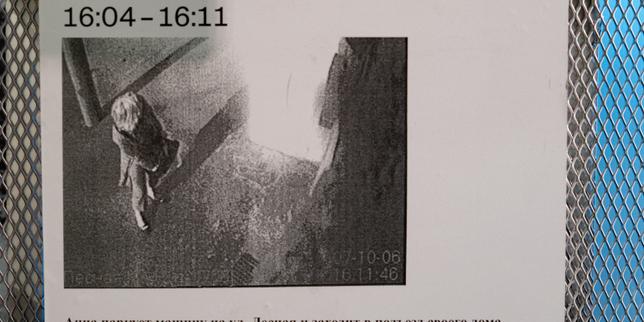
Twenty years ago, on October 7, 2006, a gunman stepped into an elevator in a Moscow apartment building and ended the life of Anna Politkovskaya. She was forty-eight. At the time, much of the Western world was still trying to figure out who Vladimir Putin was, treating him as a pragmatic leader who could bring stability to a post-Soviet Russia. Politkovskaya didn't buy the illusion. She saw the authoritarian apparatus taking shape while others were still looking away.
Her reporting for Novaya Gazeta wasn't written from comfortable offices in Moscow or foreign capitals. It came directly from the mud, blood, and broken lives of Chechnya. While official state television presented a sanitized narrative of order and national revival, Politkovskaya documented forced disappearances, filtration camps, and state-sanctioned torture. She understood that the brutal tactics deployed in the North Caucasus weren't regional anomalies. They were the testing ground for a new type of dictatorship.
The Cost of Telling the Truth
Most people misunderstand the nature of Russian state control during Putin's early years. It wasn't built overnight. It was forged through a gradual erosion of independent institutions, a process Politkovskaya tracked with terrifying clarity. She watched regional governors lose their autonomy, independent television networks get swallowed up by state-backed monopolies, and courts turn into rubber stamps for the security services.
She received threats daily. She was detained, harassed, and even poisoned on a flight to Beslan in 2004 while trying to cover the school hostage crisis. None of it stopped her. She knew the risks better than anyone, yet she refused to practice self-censorship. When colleagues urged her to tone down her investigations, she pointed out that silence was a form of complicity.
What Most Observers Missed
Western politicians loved to talk about realpolitik. They wanted a stable partner for energy deals and security cooperation, so they chose to ignore the warning signs. Politkovskaya's work exposed the fundamental flaw in that thinking: a regime that terrorizes its own citizens will eventually turn its aggression outward.
Her books, including Putin's Russia, laid out the blueprint. She described a system where the KGB—disguised as the FSB—had seized control of the state's economic and political levers. She showed how corruption wasn't just a byproduct of the system; it was the glue holding the power vertical together. When she wrote about the cynical manipulation of public fear after apartment bombings or terrorist attacks, she was describing mechanisms of control that would define Russian politics for decades.
Why Her Legacy Matters Today
Two decades after her assassination, the tragedy is how right she turned out to be. The war in Ukraine, the total suppression of domestic dissent, the elimination of any remaining independent media—all of these developments are direct extensions of the system Politkovskaya diagnosed in the early 2000s.
We often talk about journalists as chroniclers of history, but the rare ones are prophets of the present. Politkovskaya didn't just report the news; she exposed the hidden architecture of a rising tyranny when the rest of the world preferred a convenient fairy tale.
Read her work. Study how she refused to look away when looking away was the easiest option in the room. Real courage isn't the absence of fear; it's keeping your eyes open when the lights go out.


