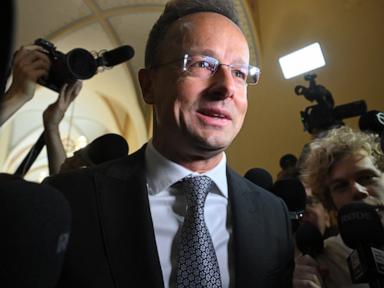
Power changes hands quickly in Budapest. When former Prime Minister Viktor Orbán’s regime lost power in April, the political fallout was immediate. Now, former Foreign Minister Péter Szijjártó is facing serious scrutiny for what critics call a glaring conflict of interest: jumping straight from government office into a high-paying executive role with BYD, the massive Chinese electric vehicle manufacturer he spent years showering with public subsidies and diplomatic favors.
If you've followed European trade policy over the last decade, you know Hungary bet heavily on Beijing. Szijjártó served 12 years as the nation's chief diplomat, aggressively courting Chinese battery makers and automakers. But this career pivot has triggered a closed-door parliamentary grilling by the National Security Committee, exposing the friction between political ambition and corporate alliances.
Let's break down why this political drama matters beyond Hungary's borders.
The Revolving Door Comes Under Fire
Szijjártó didn't just facilitate business ties; he laid out the red carpet. During his tenure, he secured massive state incentives for Chinese firms, including 20 billion forints (roughly $63.7 million) in government aid for BYD's European headquarters and research center in Budapest, alongside a massive manufacturing plant near Szeged.
When you spend a decade handing out hundreds of billions in public money and infrastructure support to a specific foreign corporation, walking away from public service to take a job as an executive responsible for that exact company's external relations looks bad. It looks really bad.
New Prime Minister Péter Magyar didn't mince words when taking office. His administration launched investigations into all past negotiations, state commitments, and deals brokered by Szijjártó. Lawmakers want to know if public funds were weaponized to secure future private employment.
The High Cost of the Lithium-Ion Bet
Orbán's government staked its economic future on transforming Hungary into a global hub for lithium-ion battery production. Billions were poured into green-energy infrastructure, anchored by massive foreign direct investment from Chinese giants.
It sounded great on paper. In reality, shifting global electric vehicle demand and market sluggishness meant those investments didn't yield the immediate economic dividends promised. Worse yet, environmental and safety concerns began piling up.
Magyar’s administration inherited a landscape plagued by workplace safety violations and several industrial plants exceeding legal contamination limits. Local communities started pushing back hard. The cozy relationship between top Hungarian officials and foreign manufacturers suddenly transformed from an economic triumph into a major political liability.
What Szijjártó's Defense Misses
Appearing before the committee behind closed doors, Szijjártó dismissed the controversy as a series of "serious misunderstandings." He doubled down on his record, insisting that bringing BYD to Szeged was a historic success and that state subsidies remained within standard European investment frameworks.
He completely dodged the core ethical question.
Standard international transparency frameworks dictate strict cooling-off periods for high-ranking officials moving into industries they previously regulated. Bypassing these ethical norms damages public trust in democratic institutions. When a foreign minister negotiates multi-million dollar subsidies and then joins the beneficiary corporation months later, it creates an appearance of corruption that standard political spin can't wash away.
The Broader European Ripple Effect
Hungary's clash isn't an isolated incident. Across the European Union, member states are wrestling with how to balance economic necessity against national security and foreign economic dependency. Brussels is watching Budapest closely.
China's aggressive push into the European EV market via manufacturing hubs in Central Europe has sparked fierce debates over trade protectionism, environmental standards, and geopolitical alignment. Hungary acted as Beijing's Trojan horse within the EU, welcoming Chinese capital while frequently blocking unified European union foreign policy stances against China.
Now, with a new government in Budapest, the bill is coming due.
Expect tighter regulations on foreign battery plants, stricter environmental audits, and prolonged legal scrutiny into past administration deals. The era of unchecked, fast-tracked Chinese manufacturing partnerships in Hungary is officially over.
Evaluate your own exposure to geopolitical supply chain shifts, tighten your compliance frameworks, and watch how regulatory bodies across Europe start cracking down on former government officials cashing in on past state deals.

:quality(70)/cloudfront-us-east-1.images.arcpublishing.com/elimparcial/UGGLMDBQYVEEBMGNUVRRRGGBZI.JPG)

