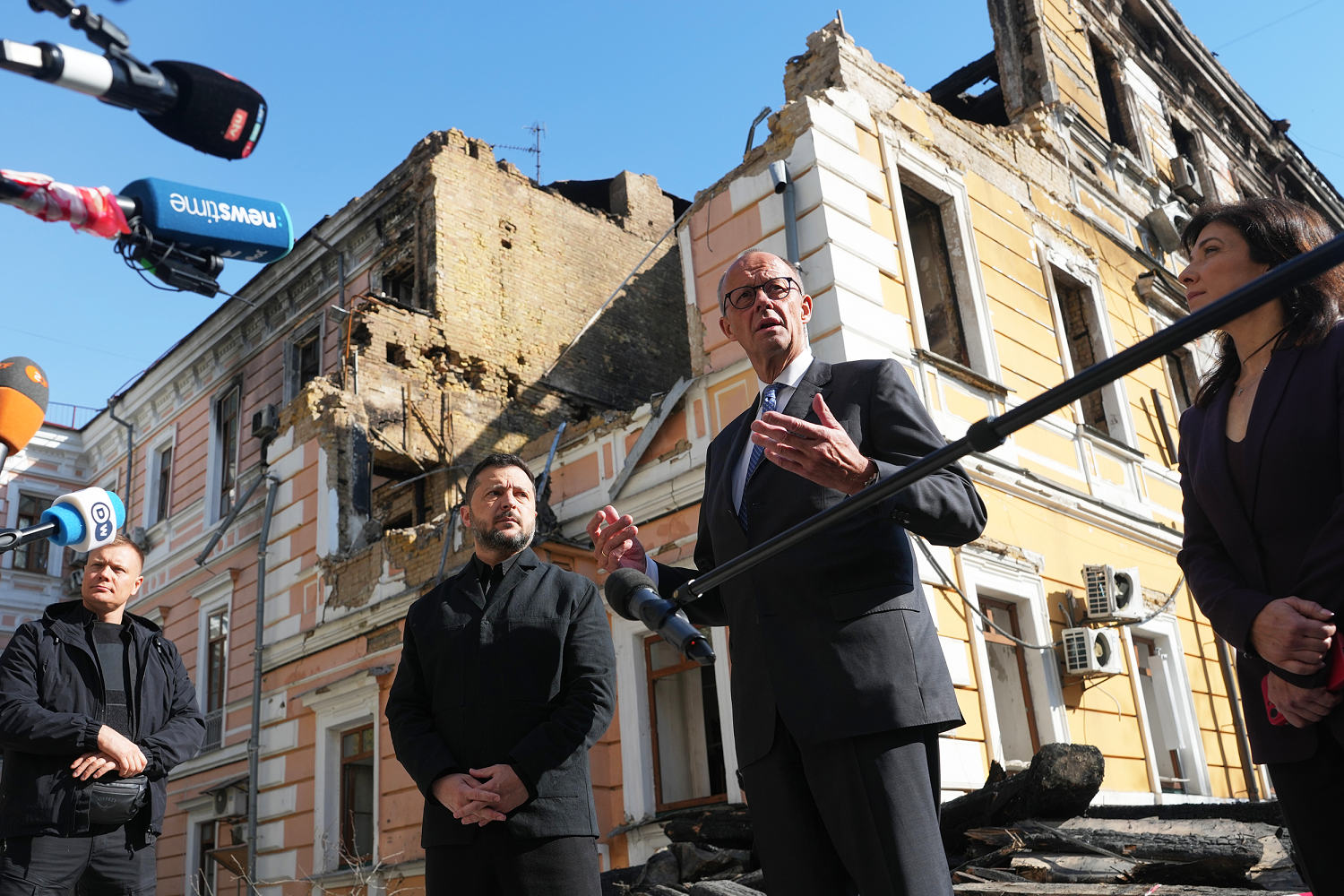
Air raid sirens don't stop for foreign leaders anymore.
When German Chancellor Friedrich Merz touched down in Kyiv for a surprise visit, he didn't receive the diplomatic courtesy or quiet airspace that past Western visitors used to expect. Instead, Russian missile strikes pounded infrastructure in the capital, targeting a major bridge and sending a blunt message to Berlin and the rest of Europe. Moscow isn't playing by the old rules of diplomatic immunity. If you liked this post, you might want to check out: this related article.
If you've been watching the war closely, you know the choreography of past visits. Previously, high-profile European officials could step off a train in Kyiv, pose for photos with President Volodymyr Zelenskyy, and enjoy a relative lull in airstrikes while they were on the ground. Those days are gone. Pro-war commentators in Moscow openly boasted that Russia no longer pauses operations when foreign politicians arrive.
The timing wasn't accidental. Merz arrived bearing heavy financial and military commitments, pledging a total aid package reaching 1.3 billion euros, with 350 million euros specifically earmarked to repair shattered energy grids and supply emergency generators. That money matters immensely as Ukraine braces for another freezing winter under targeted Russian bombardment of power plants. For another angle on this story, refer to the recent coverage from Associated Press.
Yet the escalation highlights a darker reality on the ground. Russia's foreign ministry issued stark warnings ahead of the trip, telling foreign diplomats and nationals to clear out of Kyiv due to incoming massive airstrikes. While European Union ambassadors and staff publicly rejected the threats—with EU ambassador Katarína Mathernová tweeting that the delegation is staying put—the threat environment has fundamentally shifted.
Inside Kyiv, home to roughly three million people, the mood is tense. Residents remember the brutal winter months when power and heating failed as temperatures plummeted. Now, as new strikes hit crucial transit links like bridges, conversations among locals focus on survival contingencies and whether vulnerable citizens should evacuate before cold weather sets in.
Back in Germany, Merz is walking a political tightrope. His unwavering support for Ukraine comes at a heavy domestic cost. Approval ratings are slipping, and domestic opposition from both the far-left and the far-right has grown vocal. Critics argue that spending billions abroad strains public funds at home when pensions and health insurance budgets feel the pinch. Despite domestic friction, Merz doubled down on his stance, signaling that Berlin won't be bullied into stepping back.
Zelenskyy pointedly used the joint press conference to dismantle any illusions about quick diplomatic fixes. He noted that the ongoing bombardments prove that simply asking Moscow for peace won't work. The escalation serves as a harsh reminder to Western capitals that hybrid warfare, infrastructure destruction, and direct threats against diplomatic missions are part of an ongoing strategy.
As the war drags past its 1,600th day, the calculus in European capitals is changing. When missiles fly over the heads of visiting heads of state, diplomacy takes on a much sharper edge. There are no safe corridors left in Kyiv, and European leaders are finding out that solidarity now requires standing under active fire.
Putin Starts Bombing Kyiv As German Chancellor Arrives; Major Bridge Blasted In Strike
This video provides on-the-ground footage and news coverage of the explosions hitting Kyiv during the German chancellor's visit.


