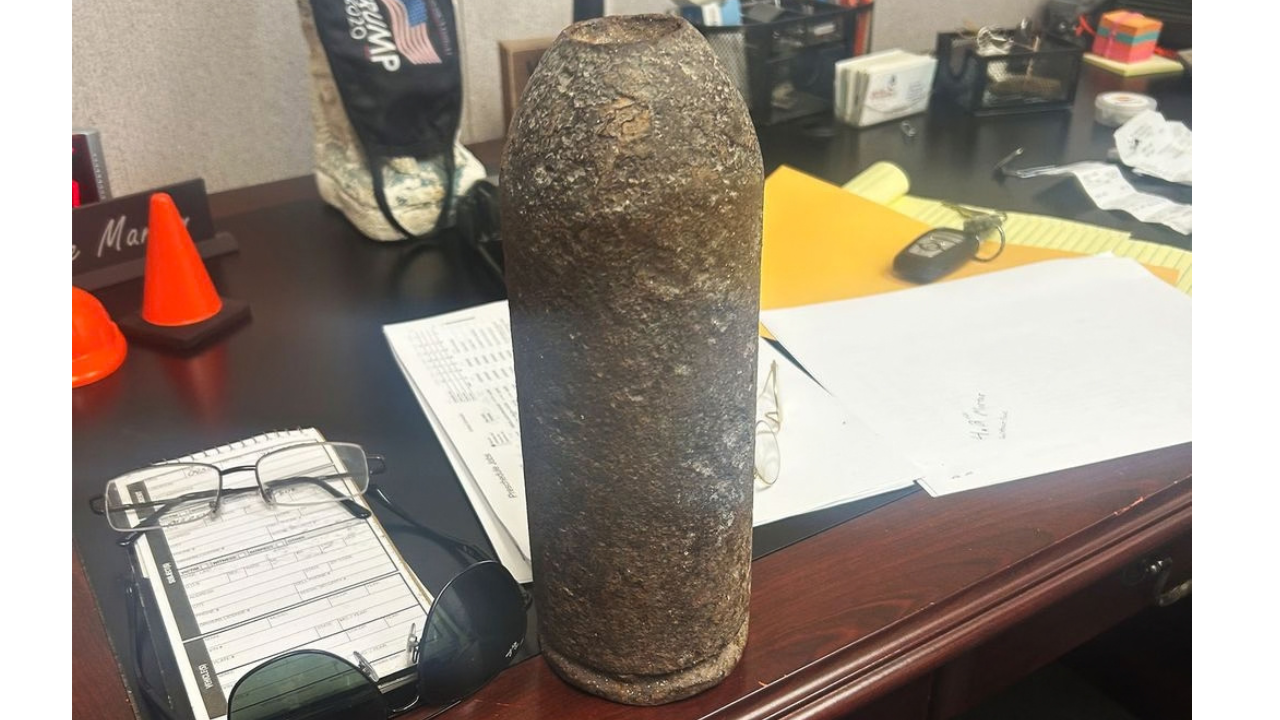
You pick up a heavy metal object, assume it's just a harmless conversation piece, and put it on your desk. You might even use it to hold down loose paperwork every single day for years. Then a visitor with a military background walks in, takes one look at your favorite desk accessory, and tells you to run.
That is exactly what happened to Steve Martin in Atascosa County, Texas. The object resting innocently on his desk was not an inert historical keepsake. It was a live, 160-year-old Parrott artillery shell packed with high explosives.
Unexploded ordnance from the American Civil War turns up in American homes, yards, and estate sales much more often than you think. People inherit them, buy them at flea markets, or find them while fishing, completely unaware that gunpowder and unstable chemical fuzes do not expire just because a century has passed.
The Reality of Unexploded Civil War Ordnance
Civil War artillery manufacturing was a mass-production industry operating under extreme wartime pressure. Factories rushed out thousands of shells, rockets, and cannonballs. Quality control was inconsistent at best. Many projectiles failed to detonate when fired on the battlefield, leaving behind unexploded ordnance buried in mud, rivers, and forests.
Over the decades, metal detectors, construction crews, and fishermen stumble upon these relics. The items find their way into private collections, antique shops, and living rooms. Owners often clean them up, polish the exterior iron, and display them proudly. They treat them like decorative bookends or paperweights.
The danger lies in the chemical stability of the internal components. Black powder and early explosive compounds degrade over long periods, making them erratic and highly sensitive to friction, heat, or sudden movement. An antique shell that has sat quietly on a wooden desk for a decade can become a ticking time bomb if the internal components crystallize or dry out.
How a Texas Desk Weight Turned Into a Bomb Threat
Martin acquired the heavy iron projectile from his son, who pulled it out of the water while fishing. Believing it was nothing more than a dummy round used for military training or display, Martin brought it home.
Friends, family members, and visitors picked it up over the years. Nobody suspected a thing until a truck driver with active military experience visited the home. The visitor recognized the distinct shape and features of a genuine combat projectile and advised Martin to alert local authorities immediately.
The Atascosa County Sheriff's Office took the report seriously. They called in an explosive ordnance disposal team from Joint Base San Antonio-Lackland to evaluate the hazard. Specialists confirmed that the roughly 20-pound object was a live Parrott round designed for a muzzle-loading rifled cannon.
Instead of keeping the historical piece in a local museum or letting the owner keep it behind glass, the military team transported the shell to an explosives range at Camp Bullis. They executed a controlled detonation to eliminate the threat safely.
What to Do If You Find a Suspected Military Relic
If you find an old metal object that resembles a grenade, mortar shell, or cannonball, don't guess about its safety. Take immediate action to protect yourself and others.
- Do not move it. Picking up, shaking, or relocating a suspicious metal object can trigger an accidental detonation. Leave it exactly where you found it.
- Clear the area. Keep family members, guests, and pets away from the object immediately.
- Call local law enforcement. Report the finding to your local sheriff's department or police. Do not transport the item in your car trunk to a police station.
- Wait for bomb technicians. Law enforcement will coordinate with military explosive ordnance disposal units who have the specialized training and equipment to handle unstable ordnance safely.
Antique collectors love a good piece of history, but turning explosive history into everyday office decor is a gamble you shouldn't take. If an old military relic is sitting in your house right now, it might be time to check whether it's truly disarmed.

.png)

