When Edmonton lawyer Prabjot Singh Wirring looked at the mandatory oath of allegiance to the British monarch, he didn't see a harmless formality. He saw a direct contradiction to his faith. As an Amritdhari Sikh, Wirring had already taken an absolute, lifelong vow to Akal Purakh, the divine creator. Pledging true allegiance to a worldly sovereign wasn't just a conflict of interest. It was a violation of his core spiritual convictions.
Instead of backing down or quietly working around the system, he launched a constitutional battle that is reshaping professional requirements across Canada.
The Clash Between Faith and Bar Requirements
For decades, entering the legal profession in provinces like Alberta came with a rigid expectation. New lawyers had to swear or solemnly affirm true allegiance to the reigning British monarch. For most applicants, it's a few seconds of spoken tradition that carries little personal weight. But for practitioners whose religious frameworks demand an exclusive, supreme spiritual allegiance, the formula creates an impossible barrier.
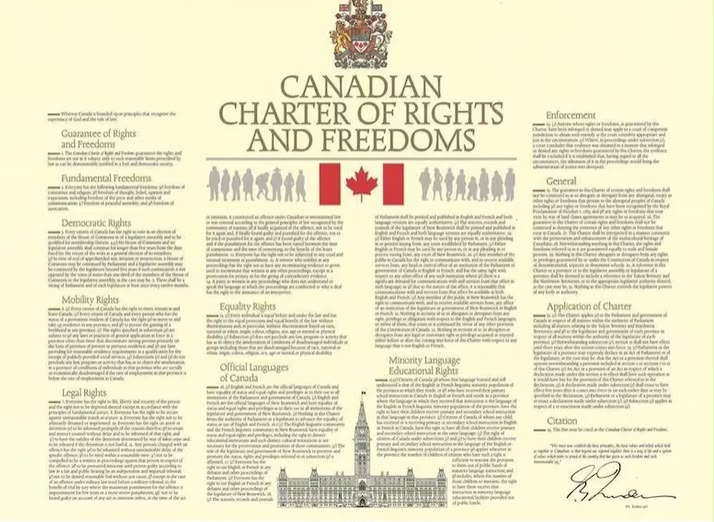
Wirring refused to compromise. In June 2022, he took action by filing a lawsuit against both the Alberta Government and the Law Society of Alberta. His argument was straightforward: forcing an oath to the Crown as a condition of practicing law infringed directly upon Section 2(a) of the Canadian Charter of Rights and Freedoms, which guarantees freedom of conscience and religion.
The initial judicial reception wasn't favorable. In October 2023, the Court of King's Bench dismissed his claim. The lower court judge reasoned that the oath was merely symbolic, suggesting it didn't create a real burden on religious freedom.
That logic ignored the gravity of what an oath actually means to someone who takes religious commitments seriously. Words matter. When an oath demands absolute allegiance, an observant believer cannot simply treat it as empty air.
Turning the Tide in the Court of Appeal
Wirring appealed the dismissal, pushing the legal fight forward.
On December 16, 2025, the Court of Appeal of Alberta delivered a unanimous ruling that upended the status quo. A three-judge panel found that compelling lawyers to swear allegiance to the monarch unjustifiably infringed on their constitutionally protected religious freedom. The court ruled the requirement unconstitutional and ordered that provincial rules be changed to accommodate religious exemptions.
This victory didn't happen in a vacuum. Other Canadian provinces had already started fixing this archaic rule. British Columbia, Saskatchewan, and Ontario had previously introduced alternative options or removed the royal allegiance requirement altogether. Alberta's legal stance was increasingly out of step with a modern, diverse society.
Yet, the legal journey didn't stop at the provincial appellate level.
Escalating to the Supreme Court of Canada
Governments rarely abandon institutional traditions without a fight. In February 2026, the Alberta provincial government filed an appeal to take the constitutional battle all the way to Canada's highest court.
By August 2026, the Supreme Court of Canada agreed to hear the case. The upcoming ruling will carry national weight, setting a definitive precedent on whether provinces can condition professional licensure on pledging fealty to a foreign-rooted Crown, and what accommodations must exist for those whose faith forbids it.
This dispute goes far beyond legal jargon or parliamentary tradition. It touches on a fundamental question: should a multicultural democracy force its citizens to choose between their livelihood and their religious integrity?
Prabjot Singh Wirring's refusal proves that individual conviction can challenge institutional inertia. As the Supreme Court prepares to hear arguments, the outcome will determine how Canada balances historical symbols with modern constitutional rights.

:quality(70)/cloudfront-us-east-1.images.arcpublishing.com/elimparcial/UGGLMDBQYVEEBMGNUVRRRGGBZI.JPG)

