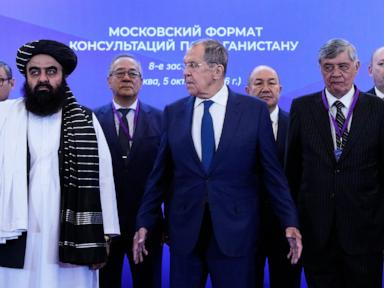
Geopolitics rarely operates on pure sentiment. Pragmatism rules the day. Moscow just proved this rule once again by rolling out the red carpet for a top-tier Taliban delegation.
Foreign Minister Sergey Lavrov welcomed the Taliban’s foreign minister, Amir Khan Muttaqi, alongside regional power brokers from China, India, Iran, Pakistan, and Central Asian states for the latest round of the Moscow Format consultations on Afghanistan. While Western capitals keep the regime at arms length over severe domestic restrictions, Russia is moving in the exact opposite direction.
You have to ask what Moscow stands to gain from warming up to a regime that remains largely isolated on the global stage. The answer lies in regional security, economic corridors, and a calculated challenge to Western hegemony.
The Real Game Behind the Moscow Format
Russia isn't hosting these talks out of pure charity. Since the chaotic U.S. and NATO withdrawal from Afghanistan in August 2021, the strategic calculus in Central Asia has flipped entirely. Moscow wants stability on its southern flank.
During the latest sessions, Lavrov didn't mince words. He openly praised the Taliban's resilience against Western military might, recalling the Soviet Union's own bruising 10-year war that ended in 1989. More importantly, Moscow credits the current Afghan leadership for cracking down on local narcotics and terror networks—threats that directly imperil Russian security interests.
By backing military-technical cooperation and continuous economic engagement, Russia is cementing itself as the primary mediator in Central Asia. They aren't waiting for Washington or Brussels to figure out their Afghanistan policy. They are writing the rulebook themselves.
Regional Powers and Shifting Alliances
Afghanistan sits at a critical geographic crossroads. That makes its neighbors extremely nervous about local instability spilling over borders.
Representatives from eight neighboring countries joined the Moscow talks to tackle very real, very messy regional flashpoints. For instance, Russia's presidential envoy for Afghanistan, Zamir Kabulov, publicly offered to mediate the persistent cross-border skirmishes between Afghanistan and Pakistan. Ongoing border fighting has strained ties between Islamabad and Kabul to a near-breaking point, and Moscow is positioning itself as the neutral firefighter ready to step in if asked.
At the same time, major players like China and India have distinct stakes in the room. Beijing wants economic stability and security guarantees regarding the Xinjiang border, while New Delhi focuses heavily on preventing Afghan soil from turning into a launchpad for regional militant groups.
The Taliban administration knows it desperately needs economic investment and international legitimacy. By showing up to the Moscow Format as a full participant, they get a stamp of regional normalcy that helps chip away at their diplomatic quarantine.
Why Western Isolation Isn't Working
Western governments assumed that freezing assets, imposing sweeping sanctions, and withholding diplomatic recognition would force the Taliban to reform its draconian domestic policies, especially concerning women and girls.
Years later, that strategy has achieved limited leverage. The humanitarian crisis inside Afghanistan remains severe, yet the regime hasn't collapsed. Instead, regional pragmatism has filled the vacuum. Countries like Russia, China, and various Central Asian neighbors have chosen to deal with the reality on the ground rather than waiting for a political transformation that may never arrive.
Russia took a major leap by removing the Taliban from its list of outlawed organizations, signaling that economic and security ties take precedence over ideological differences.
If you want to understand where Central Asian security is heading over the next decade, ignore the empty press releases coming out of Western summits. Pay attention to the quiet deals being brokered in Moscow. Pragmatism always wins when borders are at stake.

:quality(70)/cloudfront-us-east-1.images.arcpublishing.com/elimparcial/UGGLMDBQYVEEBMGNUVRRRGGBZI.JPG)

