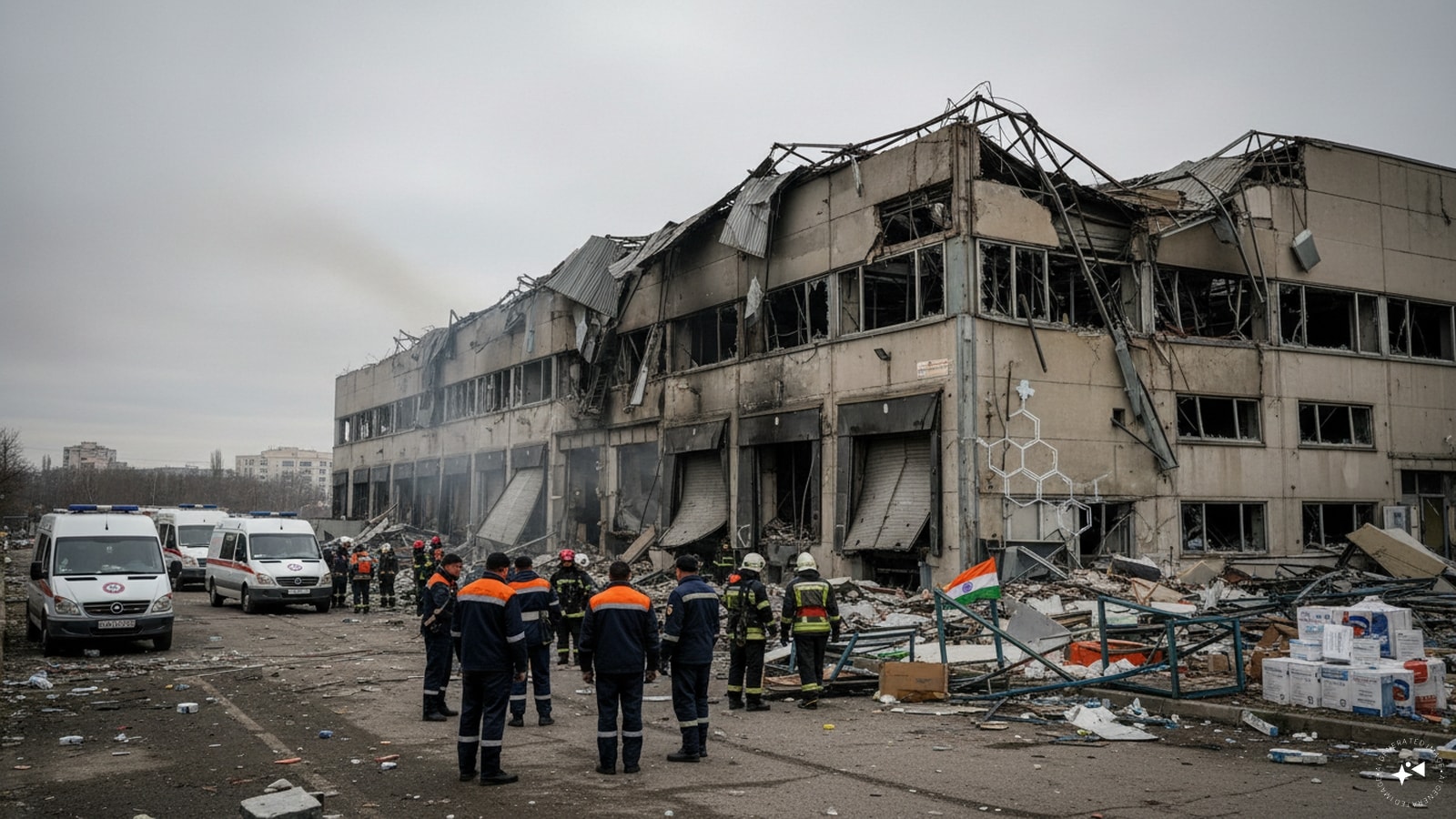
Geopolitics rarely stays neatly confined to government offices and diplomatic summits. Sometimes, it hits a civilian warehouse in Sumy. A Russian drone strike recently destroyed a pharmaceutical facility owned by India's Kusum Group, leaving one 52-year-old employee dead and three others injured.
This wasn't a stray piece of shrapnel or an accidental miss near a front line. It was part of a massive aerial barrage involving over 130 drones targeting infrastructure across Ukraine, hitting cities like Kyiv and Dnipro. Yet the strike on an Indian-owned facility brings a sharp, uncomfortable focus to New Delhi's delicate balancing act between Moscow and Kyiv.
When Civilian Infrastructure Becomes the Target
The facility in Sumy wasn't a munitions factory, a fuel depot, or a military staging ground. It stored medical supplies meant to keep ordinary people alive.
When a nation faces waves of daily aerial attacks, supply chains for basic human needs fracture instantly. Ukrainian President Volodymyr Zelenskyy highlighted the tragedy, pointing out that civilian hubs and medical distributors are getting caught directly in the line of fire. The Ukrainian Embassy in India didn't mince words either, calling out the destruction of a pharmaceutical plant that had zero military utility.
You can't separate corporate investments from geopolitical fallout anymore. When international assets are pulverized during a war of attrition, foreign investors lose confidence fast.
The Diplomatic Tightrope for New Delhi
India has maintained a deliberately neutral stance throughout the conflict, refusing to join Western sanctions against Moscow while pushing for dialogue and peace proposals. Prime Minister Narendra Modi's administration has repeatedly emphasized diplomacy.
Strikes on Indian-owned commercial assets change the calculus on the ground. When your businesses and citizens' properties are damaged by incoming fire, neutrality stops being a simple talking point. It turns into a high-stakes management exercise.
The Ukrainian diplomatic mission used the moment to press for heavier international isolation against Moscow, challenging the narrative of historic friendship when commercial infrastructure belonging to friendly nations gets flattened.
What This Means for Foreign Assets in Active Conflict Zones
Running commercial operations in an active war zone is basically a gamble against time. Insurers charge astronomical rates, supply chains break under constant electricity outages, and air raid sirens disrupt shifts every single day.
Look at what actually happens on the ground:
- Employees risk their lives just showing up for administrative or logistical shifts.
- Facilities meant to store stable medical goods face structural damage from concussive blasts.
- Corporate boards have to weigh the sunk costs of physical assets against the sheer human cost of keeping operations running in contested regions.
Businesses don't usually plan for kamikaze drones taking out their inventory. Yet here we are.
The Human Cost Behind the Headlines
Data points and diplomatic protests tend to sanitize what actually happens inside a bombed building. A 52-year-old worker went to work at a pharmaceutical warehouse and didn't come home. Three others are recovering from injuries.
Families deal with the permanent fallout while politicians trade statements on social media.
If you're watching international markets or tracking global supply chains, pay attention to how foreign capitals respond when their private commercial footprint gets directly hit. The margin for diplomatic ambiguity is shrinking fast.
Indian-Run Pharma Plant In Ukraine Destroyed In Russian Drone Attacks, 1 Killed
This video provides on-the-ground reporting and visual context regarding the drone strike on the Indian-owned pharmaceutical facility in Sumy.
http://googleusercontent.com/youtube_content/1

.png)

