A seed looks like nothing special. Tucked inside a small paper packet, it sits quietly, holding the blueprint for a plant in a form that feels almost impossibly small. Yet back in August 2007, millions of those tiny seeds went on a wild ride. Space Shuttle Endeavour lifted off on mission STS-118 carrying approximately 10 million cinnamon basil seeds into orbit.
This wasn’t just a stunt to see if seeds could survive the upper atmosphere. It formed the core of a massive educational campaign run by NASA, putting space-flown seeds directly into classrooms across the United States. Nearly one million students took part, turning everyday school desks into testing grounds for extraterrestrial agriculture.
If you've ever wondered how NASA gets kids hooked on science early, this mission remains one of the most hands-on experiments ever attempted.
The Mission Aboard Endeavour
On August 8, 2007, Space Shuttle Endeavour roared off pad 39A at the Kennedy Space Center. Aboard the flight was teacher-turned-astronaut Barbara Morgan. For Morgan, the launch marked the end of a 22-year wait. She had originally trained as the backup to Christa McAuliffe for the tragic Challenger mission in 1986, and her eventual journey into space gave the flight profound symbolic weight.
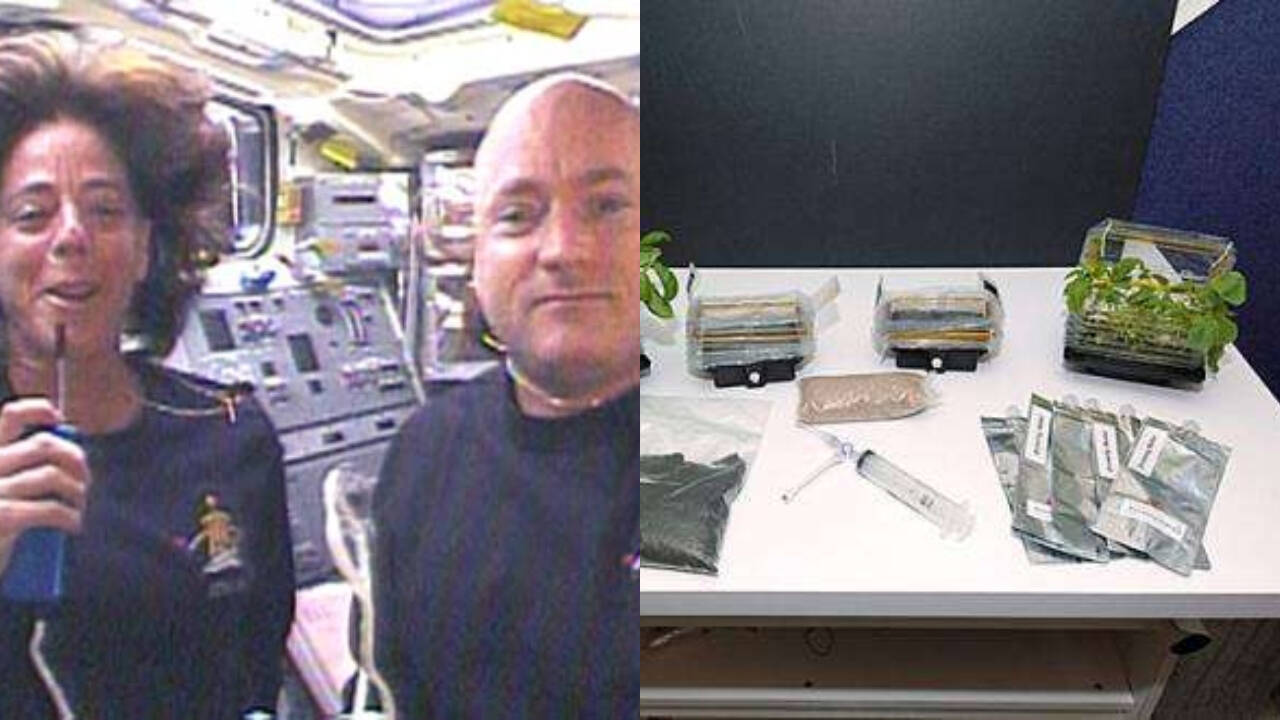
Morgan wasn't just there to operate shuttle hardware. She served as a crew member dedicated to education, broadcasting live lessons and video downlinks from orbit. Among her payload cargo were growth chambers packed with those 10 million cinnamon basil seeds alongside lettuce seeds.
The idea was straightforward. If humans ever plan to build permanent settlements or habitats on the Moon or Mars, astronauts cannot rely entirely on freeze-dried rations shipped from Earth. They need to grow their own food. But farming in microgravity or under lunar gravity poses bizarre engineering problems. Water behaves differently, lighting requirements change, and traditional soil mechanics fall apart.
Turning Classrooms Into Laboratories
The seeds weren't simply passengers for the trip. Once Endeavour returned to Earth, NASA distributed the space-flown basil seeds to schools alongside control batches that stayed on the ground. This setup formed the backbone of the Engineering Design Challenge focusing on lunar plant growth chambers.
Students didn't just read about space exploration in dusty textbooks. They built physical models of plant growing systems. They experimented with variables like light exposure, watering schedules, and chamber architecture.
When you give a group of middle-schoolers a pack of seeds that literally orbited the planet at 17,500 miles per hour, attention spans change. Engagement spikes. Classrooms transformed into experimental farms where kids tracked germination rates, measured stem lengths, and troubleshot failed prototypes.
Every adjustment to water flow or structural design showed young learners why space agriculture demands rigorous testing. If a prototype chamber leaked or trapped too much humidity, the plants rotted. If it lacked adequate light, the seedlings withered. It taught the engineering design process through real trial and error rather than abstract theory.
Why This Matters for Future Exploration
Long-term space travel relies on biological life-support systems. As space agencies look toward crewed lunar bases and deep-space transit, understanding how seeds react to spaceflight conditions remains crucial. Cosmic radiation, microgravity shifts, and storage factors all impact seed viability.
While cinnamon basil might seem like an unusual choice for high-stakes aerospace research, it proved hardy, fast-growing, and easy to measure. More importantly, it served as a gateway. Nearly one million students engaged with the project, and many of them went on to pursue degrees in science, technology, engineering, and math.
Space exploration often gets measured in rocket thrust, payload weights, and orbital altitudes. But sometimes the most enduring payload is the curiosity sparked inside a classroom thousands of miles below.
If you want to interest the next generation in engineering, stop handing them worksheets. Give them a problem that matters, hand them tools to build solutions, and let them get their hands dirty.